Color on a sectional is a code, not decoration. Blue and magenta each have a solid form, a dashed form, and a faded vignette, and each one answers a different airspace question. Part 107 then asks a second question: does this depiction require prior ATC authorization under §107.41?
Solid lines: Class B and Class C
A solid blue line is Class B. A solid magenta line is Class C. The Chart Users' Guide prints Class B ceilings and floors in solid blue figures and Class C ceilings and floors in solid magenta figures. Both drop the last two zeros and both are feet MSL.
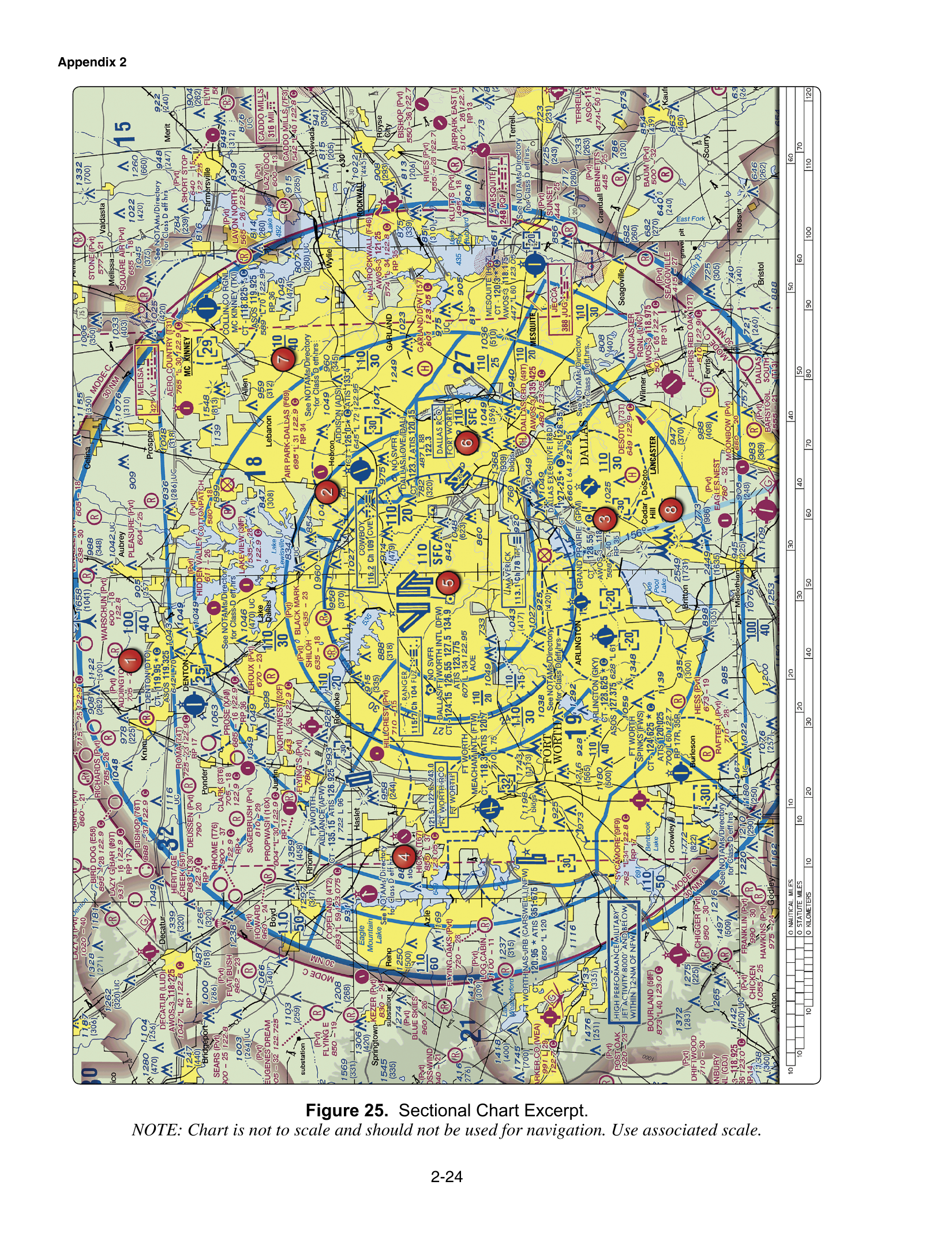
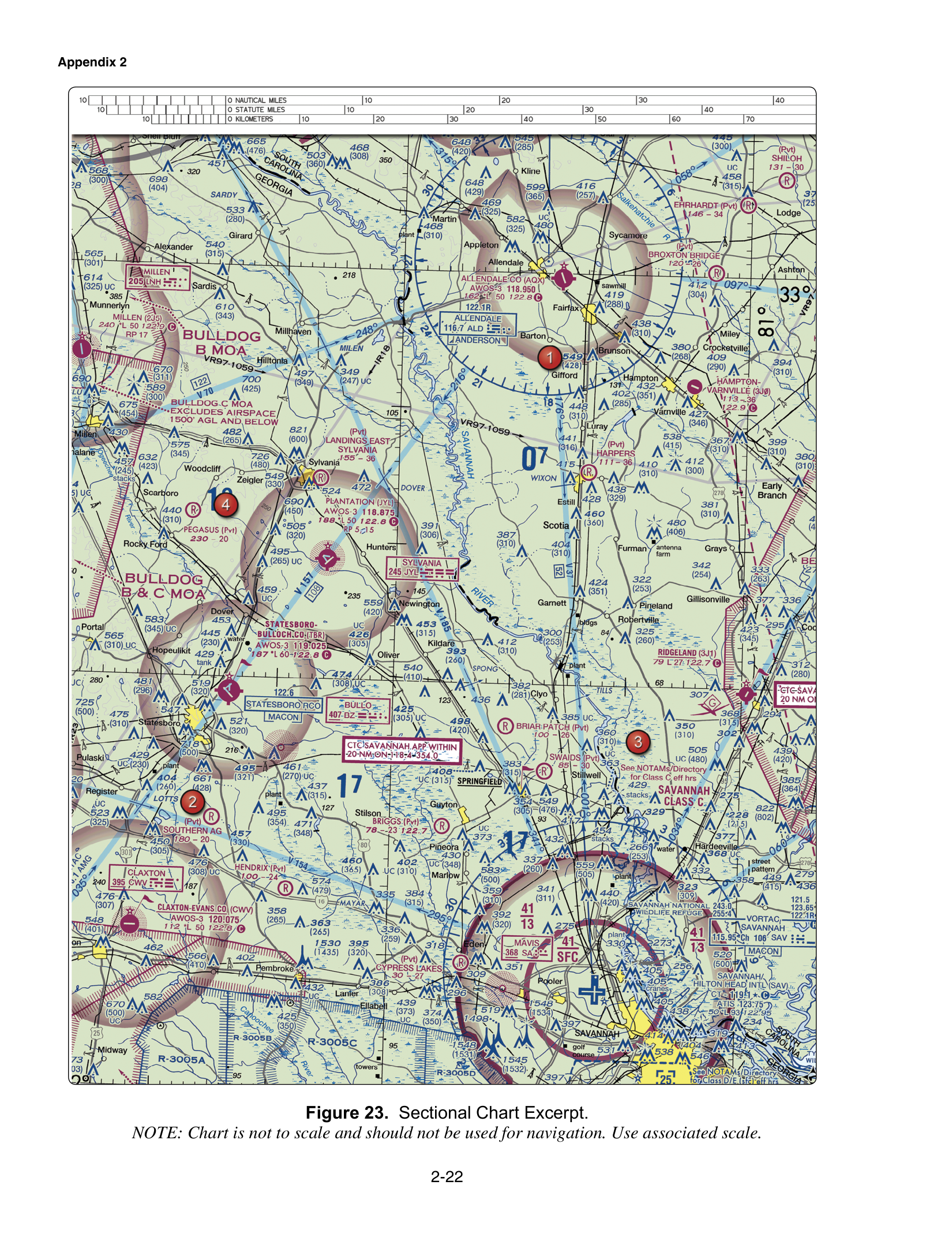
Figure 25 is the course's Class B picture. The Dallas–Fort Worth core includes a sector labeled 110 over SFC: surface to 11,000 feet MSL. Figure 23 is a Class C picture. Savannah's inner sector is 41 over SFC, surface to 4,100 feet MSL, and the outer shelf is 41 over 13, which is 1,300 feet MSL up to 4,100 feet MSL. The floor and the ceiling are different numbers. Do not read the bottom number as the ceiling.
Both classes need prior ATC authorization before a Part 107 flight, including flight that stays under 400 feet AGL. The authorization comes from LAANC or FAADroneZone. It is not created by staying low, and it is not a waiver of the altitude limit.
Dashed lines: Class D and surface Class E
A dashed blue line is Class D. It is usually a surface area around a towered airport, with the ceiling printed nearby. A minus sign means up to but not including that MSL altitude. Part-time Class D is marked. When it is not in effect, do not keep treating the surface as Class D. Check the note, the Chart Supplement, and NOTAMs.
A dashed magenta line is Class E designated to the surface, typically around an airport that does not have the dashed blue Class D cylinder. Section 107.41 names this case on purpose: authorization is required within the lateral boundaries of the surface area of Class E designated for an airport. Pilots who only memorized "B, C, and D" miss the dashed magenta ring.
Figure 22, used on the NOTAM page, shows the related hours trap. A note can send you to NOTAMs and the Chart Supplement for the effective hours of surface Class E. While that surface Class E is active, §107.41 applies. When it is not active, the surface area is Class G up to the overlying Class E floor.
Vignettes: where Class E starts, not a hard wall
A faded magenta edge means Class E begins at 700 feet AGL. A faded blue edge means the Class E floor is something other than 700 feet where it meets Class G, commonly 1,200 feet AGL. The Chart Users' Guide says Class E exists at 1,200 feet AGL unless it is designated otherwise. Below that floor, if nothing else is designated, you are in Class G.
The vignette is not a "stay out" line for a drone at 200 feet AGL. It tells you the floor of the controlled airspace above you. Your Part 107 altitude limit is still 400 feet AGL unless you are using the structure exception. A 400-foot flight under a 700-foot magenta floor can be entirely in Class G, which does not require §107.41 authorization. The same flight under a surface Class E dashed magenta line does.
The magenta line that is not Class C
The Chart Users' Guide draws a Mode C veil as a solid magenta line about 30 nautical miles from the primary airport of a Class B, labeled for Mode C and ADS-B Out. That ring is a manned-aircraft equipment depiction. It is not the Class C boundary, and it is not by itself a Part 107 authorization line. If you are outside the solid blue Class B shelves and outside any Class C or D or surface Class E, do not invent a LAANC requirement from the veil alone. Still check NOTAMs, because a veil does not cancel a TFR.
A one-minute read of any ring
- Solid or dashed or faded?
- Blue or magenta?
- Are the altitude numbers MSL with two zeros missing?
- Does §107.41 name this depiction?
Solid blue, Class B, authorization. Solid magenta, Class C, authorization. Dashed blue, Class D, authorization while it is in effect. Dashed magenta, surface Class E, authorization while it is in effect. Faded magenta, 700-foot Class E floor. Faded blue, a different Class E floor against Class G.
Continue with airspace classes for the vertical picture, and with LAANC for how the authorization is actually issued.