Special-use airspace is where the test stops asking "what class is this?" and starts asking "who controls entry?" The labels are short: P for prohibited, R for restricted, MOA for Military Operations Area, plus warning areas, alert areas, and controlled firing areas. They are not extra airspace classes. A restricted area can sit inside Class E or over Class G. The special-use rule is layered on top.
Restricted and prohibited areas
Section 107.45 is short. No person may operate a small unmanned aircraft in prohibited or restricted areas unless that person has permission from the using or controlling agency, as appropriate. Both area types are in the sentence. A NOTAM review does not substitute for permission. Restricted areas are not "just Class G, so fly through."
Prohibited areas protect sensitive places. Permission is rarely granted. Restricted areas protect hazardous activity such as artillery, missiles, or similar military use. The chart identifies the area by number. The using agency, the altitudes, and the times are in the sectional's special-use table and in the current status, not in the magenta or blue airspace color underneath.
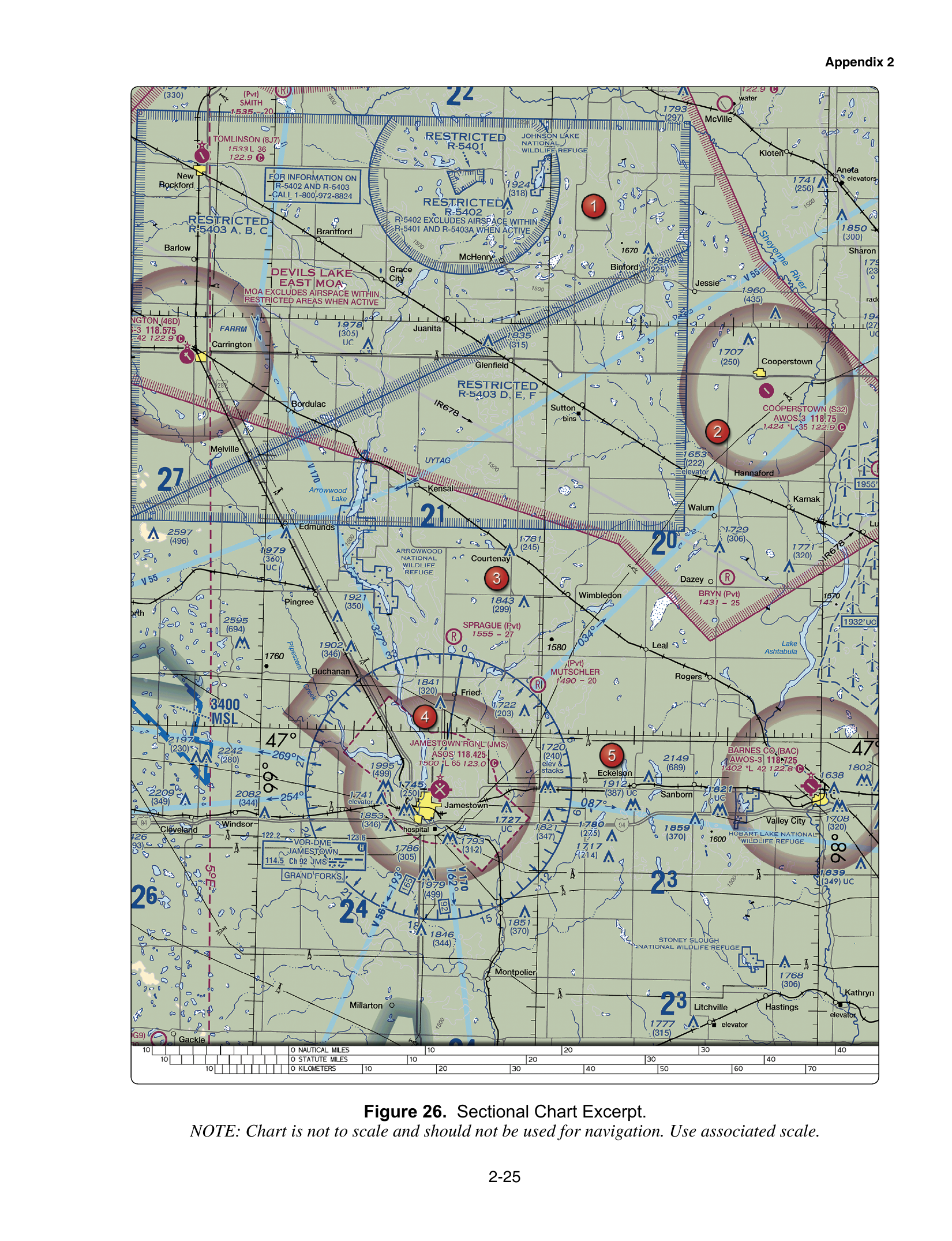
Figure 26 is the course's restricted-area picture, around Jamestown, with R-5401 and R-5402. An obstruction near those areas is charted 1924 (318): 1,924 feet MSL and 318 feet AGL. The obstruction question and the airspace question are different. You can read the height correctly and still be illegal if you enter the restricted area while it is active without permission.
The course's reading of an active restricted area is practical. Comply with the published time and status. Get the controlling agency's permission before you enter when the area is active. A Saturday "cold" status that you verified is different from assuming the area is cold because the job is on a weekend. Airport management is not the controlling agency for the restricted area.
Military Operations Areas
A MOA is special-use airspace where military training occurs. It is not a prohibited area and it is not uncontrolled Class G. Section 107.45 does not say "MOA." That distinction is the exam point. You do not apply the prohibited-area ban to a MOA, and you do not apply the MOA's lack of a §107.45 ban to a restricted area.
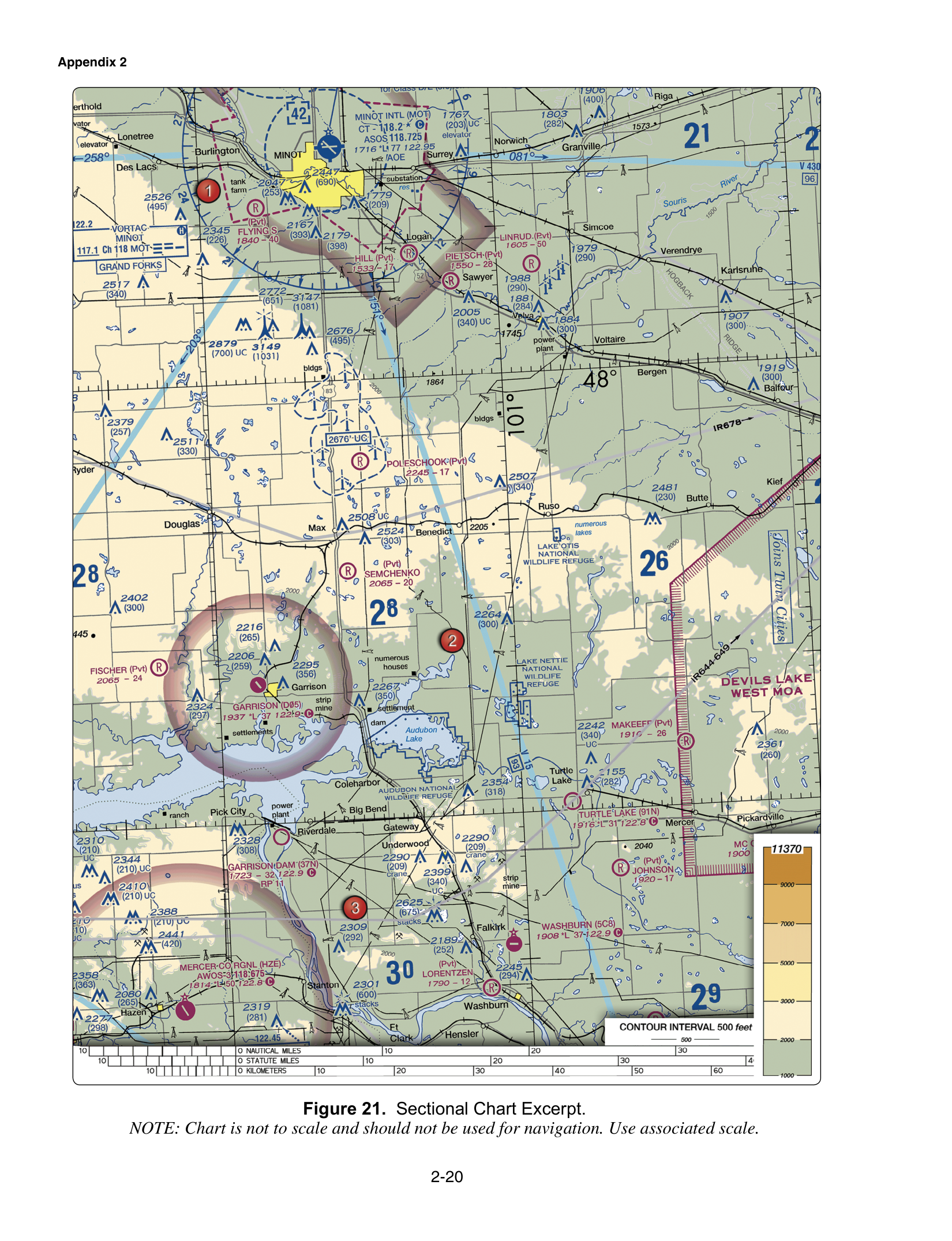
The Chart Users' Guide says special-use airspace confines certain activities or cautions other aircraft, and that these areas are depicted even when they overlap. Military aircraft in a MOA can be fast and may not be talking to you. The safe remote-pilot habit is to identify the MOA, read its altitudes and published times, and avoid conflicting with the activity. Caution is not the same legal test as §107.45 permission.
Figure 21, the Minot–Garrison excerpt, is the course figure titled for MOAs and latitude/longitude. Use it to practice finding the MOA label and the lat/long ticks in the same view, then keep the two skills separate when you answer.
Warning, alert, and the things that are not SUA entry rules
Warning areas and alert areas are also special-use or caution depictions. Alert areas, the Chart Users' Guide notes, do not extend into Class A, B, C, or D, or into Class E airport surface areas. Controlled firing areas are not charted, because activity stops when an aircraft might be approaching. None of those facts erase §107.45 for a prohibited or restricted area that is charted on top of something else.
Military training routes are a cousin, not a MOA. On Figure 59 a gray line labeled VR1667 and similar numbers is a VFR military training route. AIM 3-5-2 treats a four-digit VR identifier as a route with no segment above 1,500 feet AGL. A three-digit route has at least one segment above that. The line is a route, not a restricted-area block, and it is not a Victor airway (those use a V, not VR).
NOTAMs still sit beside the chart
Section 107.47 requires the remote pilot in command to comply with §§91.137 through 91.145 and 99.7. Those are the temporary flight restriction and security rules published by NOTAM. A charted restricted area can be inactive while a TFR is active over the same town, or the reverse. The chart is the standing picture. The NOTAM is the temporary one. Check both. The NOTAM page covers how to get that briefing.
Do not send a restricted-area request through LAANC and call it done. LAANC authorizes certain controlled airspace under §107.41. It does not grant §107.45 permission and it does not issue an operational waiver. Waiver versus authorization is covered under waivers.